

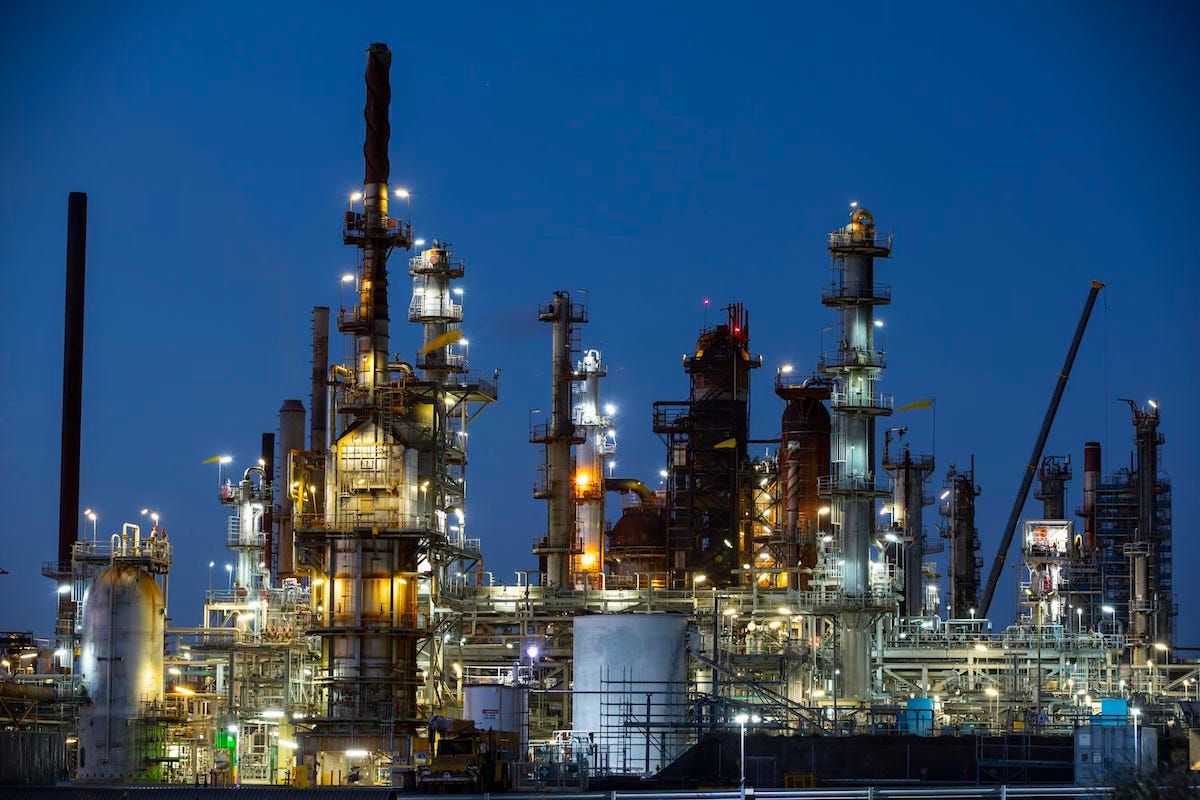
The March 2026 fuel crisis wasn’t a surprise. It was the predictable consequence of four policy shifts, accumulated over 40 years, each rational in isolation but collectively damaging.
Understanding which shifts happened, when, and why matters. Because the government’s new fuel supply task force is currently deciding whether to repeat the same logic or break the pattern. The outcome determines whether Australia still has two domestic refineries in 2030, whether regional fuel security is mandated, whether strategic reserves transition from a deferred problem to an infrastructure investment, and whether Australia’s upstream resource position is ever used as a bargaining chip for supply security.
This is the policy archaeology.
1. Import Parity Pricing (Fraser Government, 1970s)
In the mid‑1970s, the Fraser Government introduced import parity pricing for domestically produced crude oil. The rationale was straightforward: price domestic crude at world market rates, and producers will invest in exploration rather than accept artificially suppressed prices.
It worked. Production grew. Australia reached approximately 70% domestic crude self‑sufficiency through the 1980s and 1990s.
But import parity pricing had a structural consequence that policymakers did not adequately weigh. Once domestic crude is priced at world market rates, producers can and do export it to Asian markets at premium prices rather than supply domestic refineries at the same cost.
John Howard, defending the logic in 1990, articulated the trade‑off explicitly: “By taking the world price, we encourage investment in the industry. If you start artificially suppressing the price, you won’t have the same amount of investment.”
True. But the policy created incentives that systematically channelled production away from domestic processing. The policy designed to encourage upstream investment simultaneously undermined downstream demand for that investment.
2. The Crude Quality Mismatch (1960s–1980s)
Premium quality Australian crude is ideally suited to Asian mega‑refineries, which pay a 5–10% price premium over benchmark grades. Domestic refineries, built in the 1950s and 1960s, were configured for heavier crude. That was what was available and cheap when they were designed.
Australia’s major oil fields—Bass Strait in 1965, the North West Shelf through the 1970s—weren’t discovered until after those refineries were built. By the time it was clear that domestic production would be light and sweet, the economics of retrofitting made no sense when the alternative was more profitable: export the premium crude and import cheaper heavy crude to run through existing plants.
Nobody made a dumb decision. Each actor—government, refiners, producers—made rational choices. The problem is that nobody connected the dots as circumstances changed.
Import parity pricing institutionalised this arrangement. The deregulation of crude exports in the mid‑1980s formalised it. By the 1990s, Australia was systematically exporting its premium domestic crude and importing cheaper heavy crude for domestic processing.
A rational market outcome built on a policy foundation that had become obsolete.
3. Six Refinery Closures (2013–2021)
Australia had eight operational refineries in the early 2000s. Between 2013 and 2021, six closed.
Shell’s Clyde, Sydney (2013)
Caltex’s Kurnell, Sydney (2014)
BP’s Bulwer Island, Brisbane (2015)
BP’s Kwinana, Perth (2021)
ExxonMobil’s Altona, Melbourne (2021)
Each closure was commercially justified. Asian mega‑refineries, 15 times larger and operating in lower‑cost jurisdictions with newer technology, had made small Australian facilities uneconomic. A Singapore refinery processes around 1.1 million barrels per day. Clyde processed about 75,000.
But the government had the power to intervene and consistently chose not to.
Julia Gillard, on the 2012 closure of Kurnell: “ageing capital... really quite a small refinery... by the standards of the world.”
Resources Minister Martin Ferguson, on Clyde: the closure was “a matter for the company to decide commercially.”
This is the critical tell: in 2021, the Morrison Government introduced the Fuel Security Services Payment specifically to prevent the closure of Lytton and Geelong. The FSSP proves that government intervention was always possible. Six refineries closed before it existed. Two survived because of it.
The governments that accepted closures as inevitable in 2012 and 2014 were the same governments that intervened in 2021.
But the FSSP is not a reversal of policy. It is a holding action. It pays when refining margins collapse. It requires no minimum stockholding, no production floor, no strategic return. It keeps two refineries viable enough not to close—and little more. Australia went from eight refineries to two, then wrote a cheque to preserve the last two standing. That is not energy security. It is the minimum viable intervention to avoid the embarrassment of zero.
4. Singapore Pricing — A Gradual Drift (1990s–2000s)
Australia’s integration into Singapore‑based fuel pricing benchmarks was not a single decision. It accumulated: import parity pricing in the 1970s, crude export deregulation in the 1980s, Singapore benchmarks adopted progressively through the 1990s and 2000s, and the ACCC endorsing the arrangement as competitive and transparent.
By the early 2000s, Australian retail fuel prices were fully tied to Singapore Mogas 95. No domestic price anchoring remained. Australia had made itself a complete price‑taker on the world’s most geopolitically exposed commodity.
The Paradox: Resource‑Rich AND Fuel‑Insecure
These four shifts share a common logic: the conviction that market integration and specialisation produce better outcomes than domestic capacity and sovereign resilience. Each step appeared rational in isolation. Together, they dismantled the infrastructure of fuel independence.
South Australia may hold 200 billion barrels of shale oil reserves—a resource endowment that would place Australia among the top three countries globally. The refineries that could process it have been closed. The policy framework to develop it has not been built.
Australia is resource‑rich and fuel‑insecure simultaneously.
That is not a market outcome. It is a policy outcome.
Managing the Optics, Not the Problem. Here Are the Questions That Matter.
The government’s response to the March 2026 crisis was a task force. Its mandate: coordinate supply, manage distribution, provide updates. It is led by Anthea Harris, former CEO of the Australian Energy Regulator and the Energy Security Board—bodies whose remit is the net zero transition, not liquid fossil fuel security. The appointment signals what the government actually thinks this is: a communications and coordination problem, not a sovereign capability failure.
The tell is that Australia already had a coordination mechanism. A National Fuel Council—established in 2023 following the Defence Strategic Review’s identification of fuel as a critical national security vulnerability—held its inaugural meeting in August 2023 and went quiet. The March 2026 task force was built to do the same job. Australia did not lack a mechanism. It lacked the institutional will to use one.
Four structural questions sit behind the task force’s operational mandate. They are the ones that matter. And they are more urgent than the price exposure argument suggests: approximately 83% of Australia’s maritime fuel imports transit Indonesia’s straits—Malacca, Lombok, and Sunda. A simultaneous Hormuz closure and Indonesian strait disruption would cut physical supply, not just make it expensive. Australia’s vulnerability is not only financial. It is geographic.
1. Should Australia hold more strategic reserves?
The 90‑day IEA standard costs approximately A20 billion to meet through domestic storage infrastructure—the number successive governments have described as “economically unviable.”
But there is a lower‑cost pathway. Formalising agreements with allied nations—Japan, South Korea, and the United States—to hold fuel on Australia’s behalf. It is the energy equivalent of keeping emergency savings in a joint account. The IEA emergency response mechanism already exists. Australia’s participation could be contractualised at a fraction of the cost of domestic storage.
The question reveals policy philosophy: Is fuel security an infrastructure investment or a budget line item to defer?
2. Should the FSSP be redesigned?
The FSSP expires June 2027. Both Lytton and Geelong need policy certainty to justify continued capital investment.
But the current mechanism is a passive margin subsidy. It pays when refining margins collapse, provides no minimum stockholding requirement, and demands nothing in return.
Japan is instructive here. Japan buys its fuel from the same Singapore market as Australia—it faces the same price shocks. The Middle East conflict pushed Japanese retail prices to record highs in March 2026. But Japan had a pre-built subsidy mechanism sitting ready. When prices crossed 200 yen per litre, the government switched it back on within days and capped prices at 170 yen. Australia faced the same crisis and improvised: emergency reserve releases, lowered fuel standards, a supply chain coordinator appointed on the fly. The difference is not exposure to global prices—both countries have that. The difference is whether you built something to manage it.
A redesigned FSSP that requires refineries to maintain minimum fuel stocks and contribute to a national supply buffer would convert a passive subsidy into an active strategic asset. The government is currently reviewing the mechanism. The outcome will determine whether Australia still has two domestic refineries in 2030.
3. Should regional fuel distribution be treated as an essential service?
The March 2026 crisis was not a national supply shortage. It was a logistics failure. Major wholesalers prioritised their own retail networks and allocated 10% of normal volumes to independent regional distributors. The supply sat in terminals in capital cities. The shortage was in country Queensland and rural Western Australia.
Mandating minimum supply allocations to independent regional distributors during declared fuel emergencies is a low‑cost regulatory fix for the most politically visible failure in the system. It requires a regulation, not an infrastructure budget.
4. Can Australia convert its upstream position into a supply security guarantee?
Australia is South Korea’s largest diesel customer—28.1% of all South Korean diesel exports in 2025 went to Australia. Australia is also a major condensate and LNG supplier to South Korean and Japanese refiners. That mutual dependency exists right now. It is not formalised.
In March 2026, South Korea’s Minister of Trade stated explicitly that “securing and strengthening alternative supply sources from non-Persian Gulf producers, such as Australia, is essential.” The diplomatic channel is open. An Australia–South Korea arrangement—condensate and LNG supply upstream, prioritised refined product access downstream—would be a fourth pathway to supply security: cheaper than domestic storage, more direct than the IEA joint-account model, and available now.
The short-term question is whether the Wong–Cho diplomatic channel can activate preferential supply access during the current crisis. The medium-term question is whether that arrangement can be formalised into a bilateral energy security treaty that survives the next disruption.
Australia has upstream bargaining power it has never deployed as a policy instrument. It assumed the market would handle supply allocation. In a crisis, South Korean refiners prioritise term contract customers—not spot buyers. Australia is currently a spot buyer of its own security.
The Decision Point Ahead
For 40 years, Australian fuel policy has followed a single organising principle: market integration produces better outcomes than domestic capacity. Let the market determine refining. Let Singapore set the price. Let reserves find their commercial level. Each step was defensible. The cumulative result is a fuel system that holds 26 days of reserves against an international standard of 90, prices every litre from a benchmark in Singapore, and has no domestic production capacity for 75–80% of what it consumes.
Strategic reserves, FSSP redesign, regional distribution mandates, and bilateral upstream leverage are not technical questions. They are a single question asked four ways: is fuel security a sovereign responsibility, or a market outcome?
So far, the answer has been: market outcome, unless the situation becomes politically untenable. The March 2026 crisis made it untenable.
Dates to Watch
June 9, 2026: ACCC decision on Ampol’s acquisition of EG Australia. If approved, Ampol controls approximately 40%+ of the national retail network with material implications for supply allocation during future declared emergencies.
Q2 2026 Budget: Either the government commits capital to strategic reserves and FSSP redesign—making fuel security a budget line, not a deferred problem—or the task force delivers a report, the issue fades, and the system resets until the next disruption.
Mid‑2026: The government must signal FSSP terms beyond June 2027 for Lytton and Geelong to commit capital investment. Silence equals policy failure on this front.
May 2026 APS release: February 2026 data will show whether post‑crisis reserve rebuilding has begun or whether the emergency release simply reduced the denominator.
June 2027: FSSP expires for both refineries.
The task force terms of reference are the first signal. If its mandate stays narrow—distribution, coordination, optics—the structural questions won’t make it onto the agenda. The budget, the FSSP renewal, and the Ampol decision will then confirm it. Those are the moments where the government’s actual position—sovereign responsibility or managed decline—becomes visible. The next 18 months are the scorecard.